
Project management is the discipline of planning, organizing, and overseeing resources to achieve specific goals within a defined timeframe. It ensures that projects are completed efficiently, on schedule, on budget, and within scope.
Key Knowledge Areas (PMBOK)
Project Integration Management: Holistic approach that focuses on ensuring all elements of a project are properly coordinated
Project Scope Management: What the project will deliver
Project Schedule Management: Ensuring tasks and overall project stays on schedule
Project Cost Management: Estimating and controlling the project budget
Project Quality Management: Confirming the project’s deliverables meet the required standards and specs
Project Resource Management: Planning for, acquiring, and managing resources required for the project
Project Communications Management: Effective communication to appropriate stakeholders throughout the project is crucial
Project Risk Management: Identifying and mitigating potential issues that could impact the project
Project Procurement Management: Acquiring resources, vendors, suppliers and managing contracts
Project Stakeholder Management: Identifing and managing expectations of all entities who are impacted by the project
Phases of Project Management
- Initiation – Defining the project’s purpose, objectives, and feasibility.
- Planning – Creating a roadmap that includes tasks, timelines, budgets, and resource allocation.
- Execution – Carrying out the plan and coordinating team activities.
- Monitoring & Controlling – Tracking progress, managing risks, and making adjustments.
- Closure – Completing deliverables, evaluating outcomes, and documenting lessons learned.
The Triple Constraint
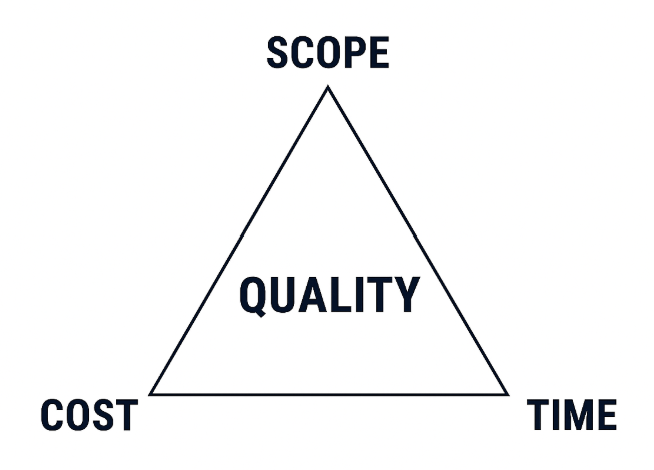
Changes in any of these areas will always affect at least one of the other areas
Scope Creep: when a project’s goals and requirements grow beyond the original plan, leading to potential problems like delays, budget overruns, and missed deadlines. Usually happens when new features, tasks, or requirements are added beyond what was originally agreed upon.
Causes of Scope Creep
- Poorly defined initial requirements.
- Lack of change control processes.
- Stakeholder request for additional features.
- Miscommunication between teams.
Consequences
- Increased costs.
- Delays in project timeline.
- Overworked teams.
- Reduced quality due to rushed work.
How to Prevent It
- Clearly define scope in the project charter.
- Use a formal change management process.
- Communicate regularly with stakeholders.
- Stick to documented requirements.
Agile vs Waterfall
“Adapt/pivot to the customer’s evolving demands” vs “Rigid/Work the Plan”
PMI.ORG – great resources for the field of project management
 MIS
MIS 